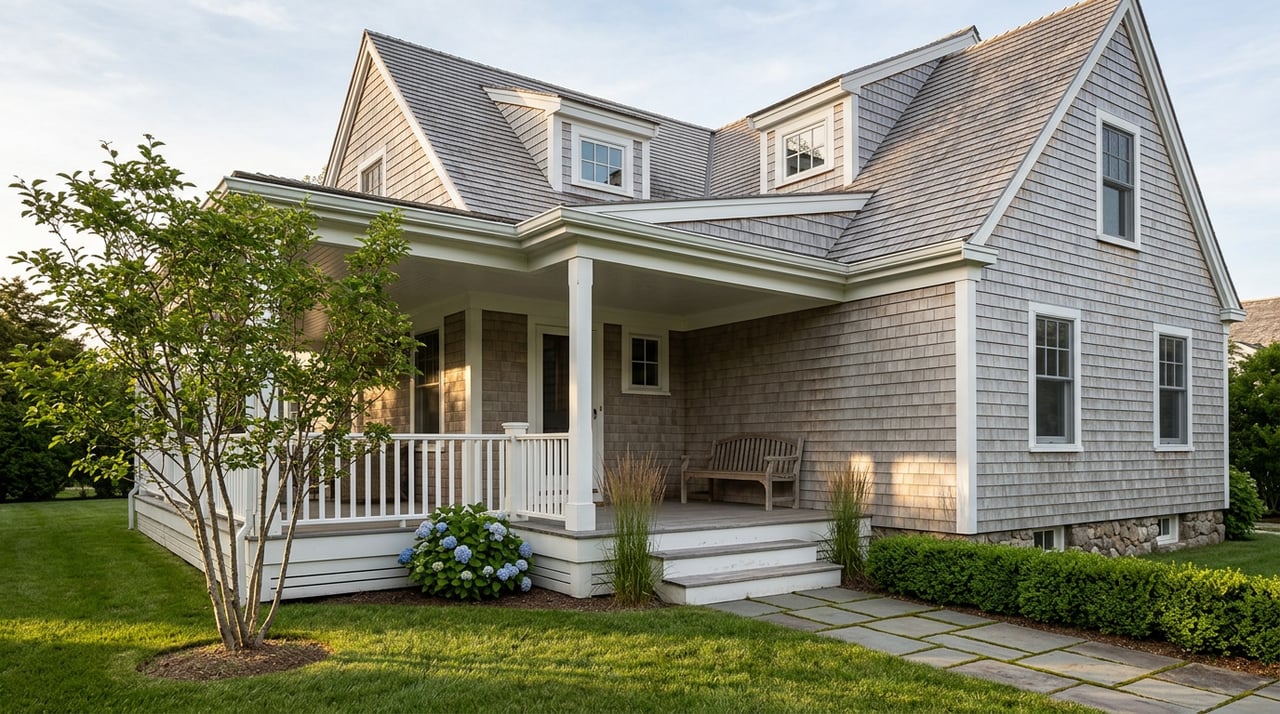
Ask a buyer why they're leaning toward the New Hampshire side of the Seacoast instead of staying in Massachusetts, and the answer almost always starts the same way: no income tax. It's the line everyone repeats about New Hampshire, and it's true as far as it goes. What it skips over is the bill that actually lands in the mailbox every year, and for a lot of buyers comparing Hampton to a town like Salisbury, that bill runs the opposite direction from what they expected.
This matters most for the buyer who already has both towns on a short list. You've seen the sale prices. You've maybe run a mortgage calculator. What you probably haven't done is pull the actual tax rate for each town and multiply it against a real assessed value, because that math isn't the headline anywhere. Once you do it, the comparison changes.
The Bill Nobody Runs the Math On
Property tax in both states works the same basic way: assessed value multiplied by a rate expressed per $1,000. The rate is where the two towns split.
Hampton's property tax rate works out to roughly $12.32 per $1,000 of assessed value, which puts the effective rate at about 1.23 percent. On a home assessed near $530,000, that lands at an annual bill of roughly $6,535.
Salisbury's fiscal year 2026 residential rate is $9.93 per $1,000, set through Massachusetts Department of Revenue data. On a median residential assessment of about $541,400, that works out to a bill of roughly $5,380 a year.
| Hampton, NH | Salisbury, MA | |
|---|---|---|
| Rate per $1,000 assessed | ~$12.32 | $9.93 (FY2026) |
| Effective rate | ~1.23% | ~1.05% |
| Typical assessed value | ~$530,000 | ~$541,400 |
| Typical annual bill | ~$6,535 | ~$5,380 |
Two homes, with assessed values about $11,000 apart, and the Hampton owner pays over a thousand dollars more a year in property tax alone. That's the part the "no income tax" pitch doesn't mention.
Why the No-Income-Tax Line Doesn't Reach the Property Tax Bill
The reason isn't a fluke of these two towns. It's structural. New Hampshire has no broad-based income tax and no general sales tax, which means property tax carries almost the entire weight of funding local schools, police, fire, and public works. A report from the New Hampshire Fiscal Policy Institute, covered by New Hampshire Public Radio, found that local governments in the state pulled 61 percent of their overall revenue from property taxes in 2022, a larger share than any other state relies on. The same report found that aggregate local property taxes in New Hampshire grew 12 percent over the prior decade, adjusted for inflation, with the researchers pointing to the state's heavy reliance on this one revenue source as the reason rates keep climbing.
Massachusetts spreads its funding across income tax, sales tax, and property tax together, so no single line has to carry as much. That's the mechanism. It's not that New Hampshire towns spend more per household. It's that the property tax bill is doing a job that three different taxes share across the state line in Salisbury.
This doesn't mean New Hampshire loses on every dollar. A high earner with a modest home can still come out ahead once the income tax savings are counted. The point is narrower and more useful for a buyer running numbers today: the property tax line specifically, the one that shows up twice a year regardless of what you earn, tends to be higher in Hampton than in a Massachusetts town with a comparable assessed value, not lower.
Rates also swing hard within New Hampshire itself. Seacoast towns alone run from under $10 per $1,000 in some communities to well over $25 per $1,000 in others, with lower rates generally paired with higher home values. Hampton sits in the middle of that range, not at either extreme, which is exactly why it's worth checking the actual number rather than assuming the state line does the work.
The Second Bill Hampton Buyers Don't See Coming
Buyers who narrow in on Hampton Beach specifically run into a layer that doesn't exist in Salisbury or in most of Hampton itself: the Hampton Beach Village District. It's a separate taxing precinct that covers the beach area, with its own budget voted on by the district's own residents rather than the town at large.
A few things follow from that:
- A property inside the Village District carries a composite tax rate that includes this extra precinct layer, while a property a few blocks away outside the district doesn't.
- The district's budget, and therefore its portion of the tax bill, is set independently of Hampton's town-wide budget process.
- The Town of Hampton says owners of single-family homes inside the district who don't rent the property out can apply annually, by April 15, for a precinct exemption that reduces that specific portion of the bill.
That last point is easy to miss during a purchase and expensive to miss afterward. It's not automatic. It has to be filed every year, and it only applies if the home isn't generating rental income. A buyer who plans to use a Hampton Beach property purely as a residence should know this exemption exists before the first tax bill arrives, not after.
Two Very Different Clocks
The rate isn't the only thing that changes at the state line. So does the calendar the bill runs on.
According to the Town of Hampton, Hampton's tax year runs from April 1 through March 31. The first bill goes out in late spring, due around July 1, and it's an estimate based on the prior year's rate. The real number doesn't show up until the New Hampshire Department of Revenue Administration finalizes the new rate each fall, which becomes the second bill, typically due around December 1. If the rate rose over the summer, that second bill can land noticeably higher than the first, and interest on a late payment runs 8 percent annually under state law.
According to PropertyTaxDueDates.com, Massachusetts towns generally run on a quarterly cycle instead. The first two bills are preliminary, based on the prior year's tax and due around August 1 and November 1. The final two bills reflect the actual assessed value and current rate, due around February 1 and May 1.
For a buyer setting up an escrow account or budgeting monthly carrying costs, this isn't trivia. A New Hampshire buyer needs to plan for the possibility that their second annual bill is bigger than their first, through no fault of their own, simply because the real rate wasn't final yet when the first bill went out.
What This Means If You're Comparing Hampton and Salisbury Right Now
If a Hampton listing and a Salisbury listing are sitting side by side on your list at similar prices, the sale price alone won't tell you which one actually costs less to hold. Ask for the current rate per $1,000 in each town and run it against the assessed value yourself. Ask whether the Hampton property sits inside the Village District, because that changes the math again. And build in the fact that a New Hampshire tax bill isn't fully locked in until the fall true-up, while a Massachusetts quarterly bill updates more gradually across the year.
None of this makes New Hampshire the wrong choice.
The honest version of this decision isn't Massachusetts versus New Hampshire in the abstract. It's this specific home's assessed value against that specific home's assessed value, multiplied by this year's actual rate in each town, with the billing calendar and any precinct layers factored in before you sign anything.
A Few Direct Questions
Does the tax rate vary a lot between New Hampshire towns, or is Hampton typical? It varies significantly. Seacoast-area rates run from under $10 per $1,000 in some towns to over $25 per $1,000 in others, generally with lower rates in towns with higher home values. Hampton sits closer to the middle of that range, which is part of why checking the actual current rate matters more than assuming a general "New Hampshire rate" exists.
Will my Hampton tax bill jump in my first year of ownership? It can. The first bill you receive is an estimate based on the prior year's rate. The second bill, issued after the state finalizes the new rate each fall, is the true number for the year. If the rate increased, that second bill will be higher, and it's not an error.
If the property tax is higher in Hampton, why do buyers still choose New Hampshire? For buyers with significant wage, capital gains, or investment income, the absence of a state income tax can still outweigh a higher property tax bill over time. The tax rate comparison in this piece is about the property tax line specifically, not the full financial picture for every buyer.
Weighing Hampton against a Massachusetts town like Salisbury involves more moving pieces than a single tax rate, and the numbers change enough from town to town that guessing isn't worth the risk. If you're comparing specific properties across the state line and want the real numbers run for your situation, Marc Ouellet Realty Group can walk through both sides of the math with you and help you see what each option actually costs before you make an offer.
This article is general information, not legal, tax or financial advice. Consult a qualified professional about your situation.