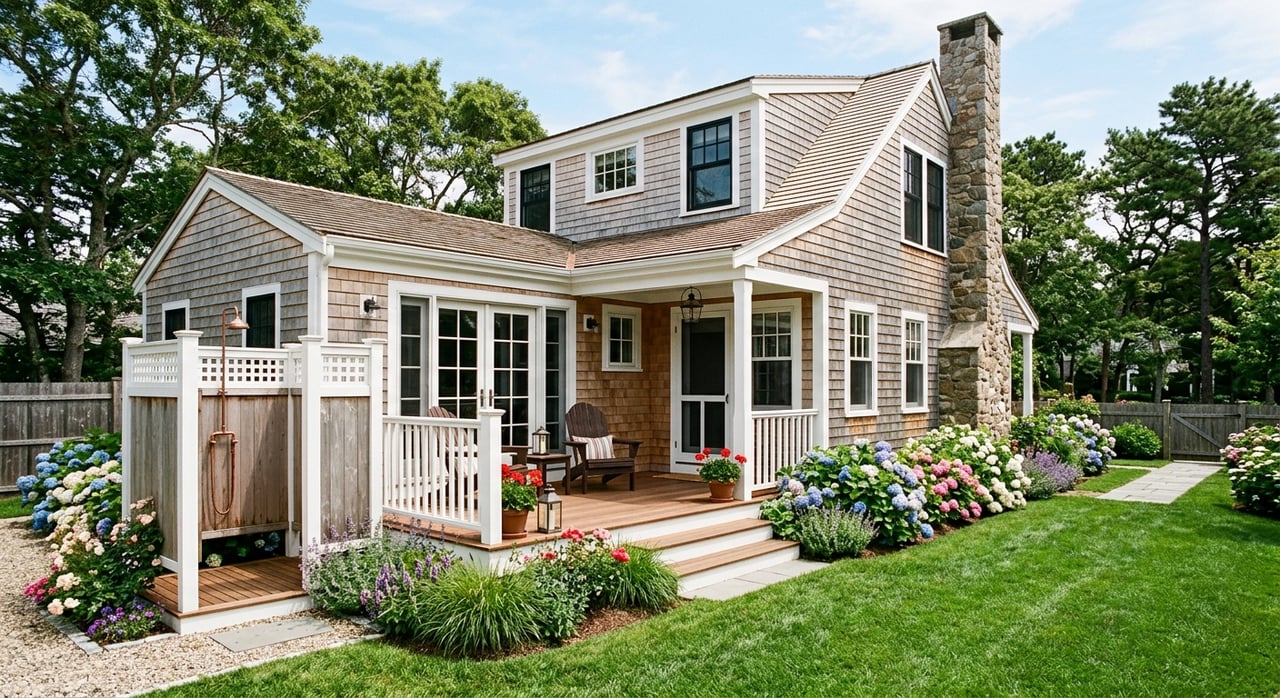
Wondering if a Salisbury property should be your next beach retreat, rental investment, or a little of both? That is a smart question, because Salisbury can look simple on the surface but requires careful planning once you factor in seasonality, local rental rules, and coastal ownership costs. If you are thinking about buying an investment or second home here, this guide will help you understand how the market works, what to verify before you buy, and how to frame the numbers realistically. Let’s dive in.
Why Salisbury attracts second-home buyers
Salisbury stands out as a coastal town with a real visitor economy. The town describes itself as a beach community with access to I-95, I-495, and Route 1, which helps connect it to the Merrimack Valley and the rest of New England. That mix of beach appeal and regional access is a big reason buyers keep Salisbury on their radar.
Salisbury Beach State Reservation also adds to the town’s seasonal draw. State sources describe a 3.8-mile coastline, 484 campsites, and more than one million visitors annually. For you as a buyer, that helps explain why demand can feel very different in peak summer than it does in the middle of winter.
Understand Salisbury's housing picture
Salisbury is not a market where you want to make assumptions about rent or appreciation. The town’s 2024-2029 housing plan says the median price for all home sales was about $593,000 in 2023. Census QuickFacts also puts the median owner-occupied housing value at $478,700 and the median gross rent at $1,691.
Those numbers matter because they show a market where purchase price, carrying cost, and rental income need to work together. The town also reports that about 30% of residents are cost-burdened, along with 44% of renter households. That is a reminder to build a realistic budget from day one.
Choose the right ownership strategy
Before you buy, it helps to decide what kind of property you are really purchasing. In Salisbury, the numbers and rules can look very different depending on whether you want a year-round rental, a seasonal rental, or a mostly personal-use beach house. Getting clear on that early can help you narrow down the right property and avoid costly surprises.
Year-round rental plan
A year-round rental can make sense in Salisbury, especially if you are targeting tenants who want coastal living with regional commuting access. The town notes low homeownership vacancy, relatively strong rental prices, and transit connections including Route 20 service to the Newburyport Commuter Rail station and Route 17 service to nearby communities. That suggests there can be steady year-round demand, not just summer traffic.
There is another factor to watch. Salisbury has a limited share of smaller units, with just 39% of the housing stock made up of one- and two-bedroom homes, while 61% has three or more bedrooms. If you are considering a smaller property, limited supply could support demand, but you still need to compare expected rent against all operating costs.
Seasonal rental plan
For many buyers, Salisbury fits more naturally as a seasonal rental market. The Board of Health defines a seasonal rental as a lease of no more than five months, and a short-term rental as a stay of no more than 31 days. That lines up with the town’s clearly seasonal beach pattern, including parking enforcement from May 1 to October 15 and state beach parking fees during the summer season.
In plain terms, summer demand may be the strongest part of your income story. That does not mean off-season income is impossible, but it does mean you should be cautious about assuming high occupancy all year. A property that performs well in July may look very different in January.
Personal-use beach house
If you want a second home first and rental income second, Salisbury may still be a strong fit. The town’s habitability regulation exempts homes occupied by the owner and immediate family from the certificate requirement. Once you begin renting to non-family tenants, though, the rental rules apply.
That distinction matters. If your goal is mostly personal enjoyment with only occasional rental use, you should treat any income as a way to offset costs rather than fully justify the purchase. This is often the most realistic way to evaluate a hybrid beach-house purchase.
Know the rental rules before closing
One of the biggest mistakes buyers make is assuming they can figure out the rental compliance side later. In Salisbury, you want clarity before you close. The town requires a Certificate of Habitability before renting or leasing long-term, seasonal, or short-term dwelling units.
To get that certificate, the owner must show that town water and wastewater bills are current, real estate taxes are current, and, for short-term rentals, that the operator is registered with the Massachusetts Department of Revenue for room occupancy excise tax. Certificates are valid for five years. The town also states that failing to obtain the required certificate can lead to a $100-per-day fine while the unit is occupied without one.
Factor in occupancy taxes
If you are underwriting a short-term rental, do not stop at the nightly rate. Massachusetts has a 5.7% room occupancy excise tax, and Salisbury increased its local room occupancy excise tax to 6% effective July 1, 2018. That means taxable short-term rental stays in Salisbury are generally subject to a combined 11.7% state and local occupancy tax.
The tax base may also be broader than you expect. The Massachusetts Department of Revenue says taxable rent includes optional charges such as cleaning fees, linen fees, and booking fees. So if you are building a short-term rental budget, use gross receipts, not just the advertised nightly price.
Verify zoning and site constraints
Not every Salisbury property can be used the same way, even if two homes look similar online. Zoning is parcel-specific, so you should confirm the exact district before assuming a property fits your intended use. This is especially important if you are buying near the water or planning future improvements.
Salisbury’s zoning code includes a Floodplain District and a Salisbury Beach Overlay District. The town’s housing plan also says most land is zoned for single-family detached homes, while R-3 districts are located along the eastern coast and the Beach Commercial district allows single-family and multi-family dwellings. Accessory dwelling units are allowed by special permit in certain districts, including R-1, R-2, and R-3.
If you are considering additions or outdoor improvements, Conservation Commission rules are just as important. The town says activity that disturbs sand or vegetation within 100 feet of areas subject to flooding, salt marsh, coastal dune, or beach, or within 200 feet of perennial streams, requires a permit. That can affect decks, walkovers, dune work, fencing, drainage changes, and other exterior projects.
Flood risk is part of the deal
In Salisbury, flood review is not something to treat as a rare issue. The town’s flood information page says winter storms combined with astronomically high tides can flood shoreline areas, sometimes covering many blocks and reaching two feet deep or more. The same source also warns that standard homeowner’s insurance does not cover flood damage.
The town recommends reviewing FEMA flood maps, asking whether an elevation certificate is on file, and considering flood insurance. Salisbury’s housing plan adds more context, noting 4,779 acres in the 100-year floodplain and 1,903 structures in floodplains, with floodplains covering 44% of the community area. That does not mean every home is high risk, but it does mean flood-zone review should be part of your normal buying process.
Expect higher coastal upkeep
Coastal ownership in Salisbury comes with a maintenance profile that is different from an inland property. The town describes Salisbury Beach as a barrier beach, and its planning documents note that erosion management requires ongoing soft-engineering approaches such as sand nourishment, dune grass, and sand fencing. That means exterior upkeep is not only about appearance.
You may also need to think more carefully about drainage, materials, and future permitting. The town’s flood information also advises against placing sandbags on dunes because that can worsen erosion. If you plan to improve a coastal property, it is important to know what type of work may trigger local review.
Do not overlook winterization
Seasonal ownership has recurring operating tasks that buyers sometimes underestimate. Salisbury’s water department says seasonal water customers are those who primarily occupy their properties from May 1 to November 1. It also states that seasonal meters must be removed each fall because unheated basements and crawl spaces can freeze and damage the meter.
That is a small detail, but it reflects a bigger truth. A second home here may need annual opening and closing routines, freeze prevention, and off-season monitoring. Those costs and responsibilities should be part of your decision, whether you rent the property or keep it mostly for personal use.
Build a simple cash-flow model
A smart way to evaluate a Salisbury purchase is to separate the property into one of three use cases. That keeps your math grounded in how the home will actually be used, not in best-case assumptions. It also helps you compare one opportunity against another more clearly.
Here is a practical framework:
- Year-round rental: Compare annual gross rent against taxes, insurance, utilities, repairs, management, vacancy, and financing.
- Seasonal rental: Estimate income only during the strongest demand months, then subtract those same costs plus turnover and winterization expenses.
- Personal-use second home with occasional rental: Treat rental income as an offset to carrying costs, not as the sole reason to buy.
For a rough benchmark, Census QuickFacts lists Salisbury’s median gross rent at $1,691 per month, or about $20,300 annually before expenses. That is not a property-specific projection, but it can serve as a useful reality check when you compare asking price to potential income. It is also worth noting that the town’s housing plan says gross rent increased 111% between 2000 and 2020, which shows meaningful growth, though that still has to be weighed against purchase prices and coastal carrying costs.
Is Salisbury the right fit?
Salisbury can be a compelling place to buy if you want beach access, seasonal appeal, and a location that still connects well to the broader region. But it tends to reward buyers who do their homework. The best opportunities usually come from matching the right property to the right plan, then verifying rules, flood exposure, and realistic operating costs before you commit.
If you are thinking about buying an investment or second home in Salisbury, a calm local review can save you time and money. Marc Ouellet can help you evaluate the property’s use case, local constraints, and purchase strategy so you can move forward with more confidence.
FAQs
Can you use a Salisbury home as a short-term rental?
- Yes, but Salisbury requires a Certificate of Habitability before renting long-term, seasonal, or short-term dwelling units, and short-term rental operators must register with the Massachusetts Department of Revenue for room occupancy excise tax.
What taxes apply to short-term rentals in Salisbury?
- Taxable short-term rental stays in Salisbury are generally subject to a combined 11.7% state and local room occupancy excise tax, and taxable rent can include cleaning, linen, and booking fees.
Does flood risk matter when buying in Salisbury?
- Yes. Salisbury says winter storms and high tides can flood shoreline areas, standard homeowner’s insurance does not cover flood damage, and flood-zone review should be part of your normal due diligence.
Are seasonal rentals different from year-round rentals in Salisbury?
- Yes. Salisbury defines a seasonal rental as a lease of no more than five months, and demand often aligns with the town’s peak beach season rather than the full calendar year.
What should you verify before buying a second home in Salisbury?
- You should confirm the property’s zoning district, any Floodplain District or Salisbury Beach Overlay District issues, Conservation Commission constraints, rental certificate requirements, and likely carrying costs such as flood insurance, winterization, and maintenance.