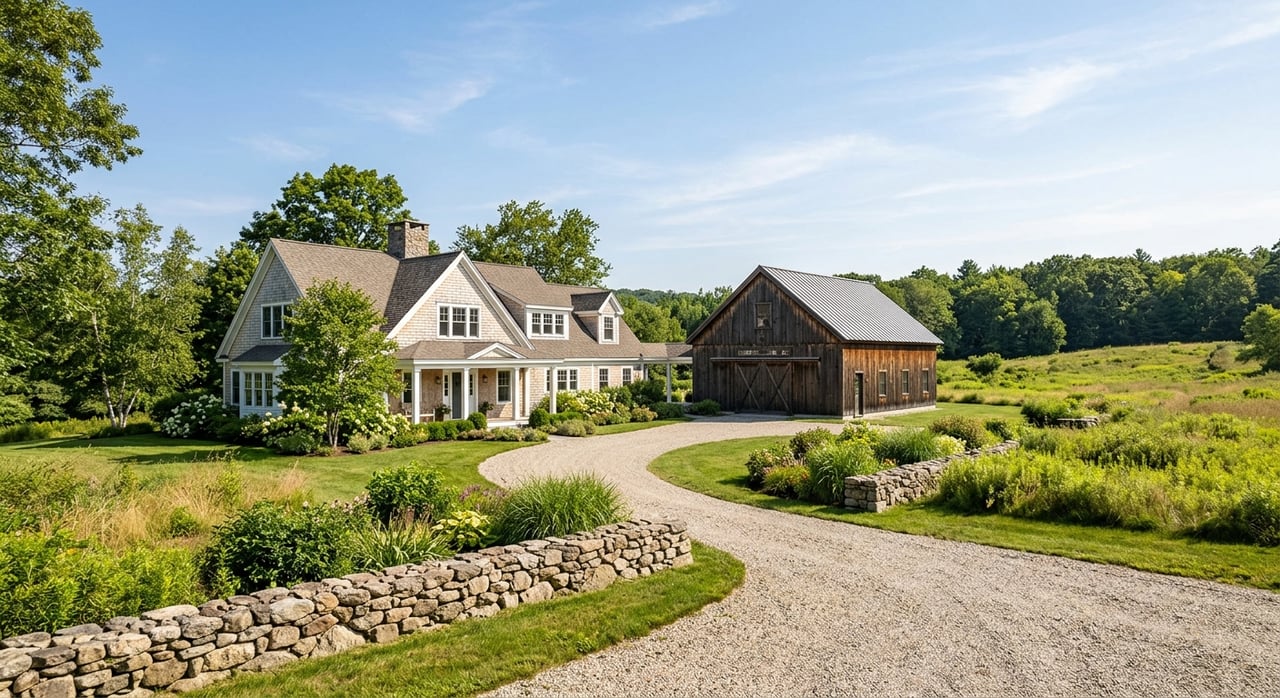
If you are looking for room to spread out, keep horses, or buy a property with real land value, West Newbury deserves a close look. This is one of the few local towns where large parcels, farm uses, and equestrian needs are part of the landscape, not an afterthought. Still, land listings here can be more complex than they first appear, especially when wetlands, zoning, and trail access come into play. This guide will help you understand what to look for before you buy. Let’s dive in.
Why West Newbury Stands Out
West Newbury has a distinctly rural character that sets it apart in the Greater Newburyport area. According to the town’s Open Space and Recreation Plan, the community covers roughly 15 square miles between I-95 and I-495 and includes hills, open fields, woods, and freshwater wetlands.
That landscape matters if you are searching for land or equestrian property. Town planning documents note that forest, wetland, open land, and agricultural cover make up much of West Newbury’s land base, which helps explain why larger residential parcels and horse-friendly properties are a real niche here.
Open Space and Trail Access
For many buyers, the appeal is not just acreage on paper. It is the ability to enjoy a rural setting with access to trails, conservation land, and active farmland nearby.
West Newbury has several notable open-space areas listed on the town’s hiking areas and trail maps page. Mill Pond & Pipestave Hill includes about 270 acres and is described as the town’s largest trail network, with popularity among horseback riders. Indian Hill Conservation Area spans 315 acres, Dunn Field includes more than 70 acres of active farmland and forest, and Artichoke River Woods preserves 46 acres with historic stone walls.
That said, not every conservation area allows the same activities. Chestnut Hill Farm Reservation specifically prohibits horses, which is an important reminder that nearby open space is not automatically horse-friendly.
Zoning Shapes What You Can Do
In West Newbury, acreage alone does not tell the full story. Zoning, overlays, lot shape, and buildable area all affect how a property may work for your goals.
The town’s zoning bylaw divides land into Residence A, Residence B, Residence C, Business, and Industrial districts, along with floodplain and groundwater protection overlays. Residence A and B are intended for low-density residential, rural, and agricultural areas, while Residence C is primarily residential.
Here is a quick look at minimum lot sizes by district:
| Zoning district | Minimum lot area |
|---|---|
| Residence A | 80,000 sq ft, about 1.84 acres |
| Residence B | 40,000 sq ft, about 0.92 acres |
| Residence C | 20,000 sq ft, about 0.46 acres |
If a use requires a special permit in Residence A, B, or C, the minimum lot area is 60,000 square feet, or about 1.38 acres, with minimum front, side, and rear yards of 50 feet.
Buildable Land Matters More Than Total Acreage
This is one of the biggest issues with land-heavy properties. A listing may advertise several acres, but not all of that acreage may count the way you expect.
Under the zoning bylaw, lot area must be contiguous and buildable. Wetlands and slopes over 20% do not count as buildable land for zoning purposes. That means a parcel with attractive total acreage may still have limited usable area for a home site, barn placement, paddocks, or other improvements.
Frontage is another point to confirm early. If access is limited, ask whether the property depends on reduced-frontage approval or a common driveway. The bylaw specifically states that common-driveway length cannot be used to satisfy frontage requirements.
Horse Keeping for Residential Use
If your goal is to keep horses for your own residential use, West Newbury’s bylaw gives you a clearer framework than many towns do. That can be very helpful when comparing properties.
The zoning bylaw allows animals for resident use with a specific land standard: one acre for the first horse or cow and one-half acre for each additional horse or cow. It also requires animals grazing within 100 feet of a district boundary or street line to be fenced.
This is one reason why usable land matters so much. You want to look beyond the tax card acreage and understand whether the parcel layout, setbacks, and environmental constraints support the number of animals you have in mind.
Barns, Stables, and Farm Structures
Buyers often focus first on the house, but with equestrian or land properties, accessory structures can be just as important. A barn, run-in shed, garage, or equipment building may be central to how the property functions day to day.
West Newbury allows riding stables by special permit in Residence A, B, and C districts. The permit conditions require animals to be housed within a building, and open-air exercise yards must be fenced and set at least 50 feet from any property line.
Placement rules also matter. The bylaw states that no buildings, except accessory farm buildings, may exceed 2.5 stories or 35 feet, and accessory structures generally must still meet yard setbacks unless they are very small. In practice, building placement can be limited more by setbacks, lot configuration, wetlands, and slope than by raw acreage.
When a Property Becomes More Regulated
Some buyers want a private horse property, while others are thinking about a larger agricultural or boarding setup. That distinction matters because the review process can change based on the intended use.
According to the zoning bylaw, site plan review applies to commercial breeding or keeping of livestock, permanent farm stands and greenhouses for commercial production, and stables boarding or servicing more than six horses. The same bylaw also permits farming in all districts, including grazing, orchards, nurseries, forests and tree farms, horticulture, and floriculture.
For commercial agriculture, the bylaw allows it on parcels of 5 acres or more. If you are evaluating a property for something beyond basic residential horse keeping, you will want to confirm early whether your intended use is an accessory residential use, a special-permit use, or a site-plan-review use.
Wetlands and Conservation Review
In West Newbury, environmental review is a major part of land due diligence. This is especially true if you are planning improvements, adding structures, or changing how the land is used.
The town’s Conservation page explains that the Conservation Commission reviews work within wetland resource areas, within 100 feet of wetlands, and within 200 feet of rivers and perennial streams. If a property includes or borders these areas, your options for building or expansion may be affected.
This does not mean a property is unworkable. It simply means you should understand constraints before you fall in love with a parcel based on acreage alone.
Chapter Land and Other Restrictions
Another smart step is checking whether the property is enrolled in a land-tax program or subject to restrictions. These details can affect both your costs and your future plans.
The same Conservation page notes that Chapter 61A agricultural land and Chapter 61B recreational land generally require at least 5 contiguous acres. These classifications can trigger municipal purchase rights or withdrawal taxes if the land is sold or converted.
You should also ask whether the parcel is subject to a conservation restriction or easement. For a buyer who wants flexibility, that answer can be just as important as the list price or lot size.
Right to Farm Is Part of Local Life
West Newbury’s rural feel comes with practical realities. If you are moving from a denser neighborhood or a more suburban setting, this is useful context.
The town’s Right to Farm bylaw recognizes farming activity, including normal noise, odors, dust, and fumes, and requires a disclosure notification to buyers or occupants during a transfer. In other words, agricultural activity is treated as a normal part of life in certain parts of town.
For many buyers, that is part of the appeal. It also means neighboring farmland or agricultural uses should be understood as a feature of the community, not a surprise issue discovered late in the process.
Questions to Ask Before You Buy
A well-located land or equestrian property in West Newbury can be a great fit, but only if the details line up with your plans. Before making an offer, it helps to ask focused questions.
Consider asking:
- How much of the parcel remains buildable after wetlands and slope deductions?
- Is the stable or barn use considered residential accessory use, a special-permit use, or a site-plan-review use?
- Does the lot rely on a common driveway or reduced-frontage approval?
- Is the property enrolled in Chapter 61, 61A, or 61B?
- Is there a conservation restriction or easement on the land?
- Are nearby trail segments horse-friendly year-round?
- Do any adjacent conservation areas prohibit horses?
These questions can save you time, money, and frustration. They also help you compare properties based on actual usability, not just marketing language.
What Buyers Should Keep in Mind
The big advantage of West Newbury is that it combines a rural setting, public open space, and zoning that clearly addresses agricultural and equestrian uses. That is not something you find in every town.
The challenge is that each property needs careful review. Two parcels with similar acreage may offer very different opportunities once you factor in buildable land, setbacks, wetland buffers, frontage, and the difference between private use and more regulated commercial activity.
If you are considering land or an equestrian property in West Newbury, working with a local agent who understands how to frame the right questions can make the search much smoother. If you want help evaluating listings, comparing parcel potential, or planning your next move, connect with Marc Ouellet for calm, informed guidance tailored to your goals.
FAQs
What makes West Newbury attractive for equestrian properties?
- West Newbury has a rural landscape of open fields, woods, wetlands, and agricultural land, plus some horse-friendly trail areas such as Mill Pond & Pipestave Hill.
How much land do you need for horses in West Newbury?
- For residential use, the zoning bylaw sets a standard of one acre for the first horse or cow and one-half acre for each additional horse or cow.
Do all West Newbury conservation areas allow horses?
- No. Some areas are horse-friendly, but Chestnut Hill Farm Reservation specifically prohibits horses.
Why is buildable acreage important for West Newbury land listings?
- Wetlands and slopes over 20% do not count as buildable land for zoning purposes, so total acreage may not reflect how much usable land a parcel actually offers.
What should buyers ask about barns and stables in West Newbury?
- Buyers should ask whether the intended use is an accessory residential use, a special-permit use, or a site-plan-review use, and whether setbacks or environmental constraints affect structure placement.
What is West Newbury Right to Farm disclosure?
- West Newbury requires a Right to Farm disclosure during transfer, which notifies buyers that normal farming activities such as noise, odors, dust, and fumes may occur in town.
Can Chapter 61A or 61B affect a West Newbury land purchase?
- Yes. Chapter 61A agricultural land and Chapter 61B recreational land may involve municipal purchase rights or withdrawal taxes if the land is sold or converted.